SAS: Zombie Assault 4
ninja kiwiAction
4.433.02K Reviews
- Version
- 2.2.2
- Installs
- 10.00M
- Age Rating
- Teen
Screenshots
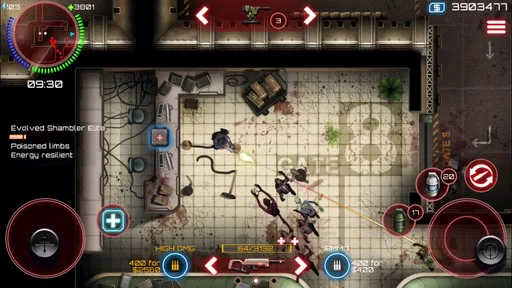
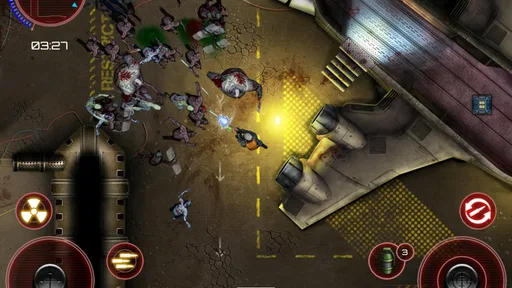
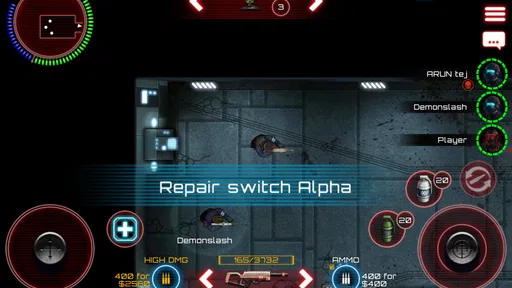
Our Review of SAS: Zombie Assault 4
 Analysis by Appyee
I came away from SAS: Zombie Assault 4 with a clear impression: this is a fast, equipment-focused zombie action game that rewards players who enjoy improving a character over time, not people looking for a relaxed, one-handed distraction. Its appeal comes from the combination of shooting, build customization, and increasingly demanding zombie encounters. I found the moment-to-moment action easy to understand, but the deeper enjoyment depends on whether you like comparing gear, adjusting your hero, and repeating missions to become stronger.
That focus explains why the game has remained visible among mobile action titles. It is free to start, has passed 10 million installs, and holds a 4.4 average from around 409 thousand ratings. Those figures do not guarantee that every player will enjoy it, but they do reflect a broad audience for its particular blend of arcade shooting and progression. The developer, ninja kiwi, presents it as a game about customizing a hero, equipment, and guns before joining the fight against zombie hordes. In practice, I think its strongest quality is how those choices affect the way each run feels.
Why the shooting and progression work together
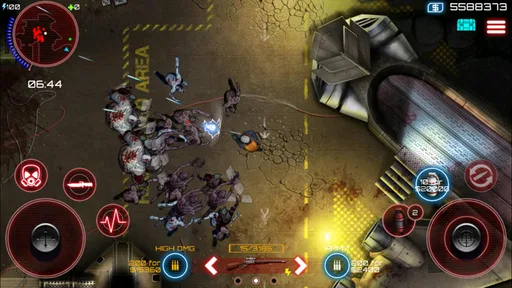
The basic attraction is immediate. Zombies approach in groups, the screen fills with threats, and I have to keep moving while choosing when to attack, reposition, or concentrate on a more dangerous target. This is not a slow survival game built around waiting for enemies to wander into view. It asks for active attention, and that makes even a short session feel more involved than simply tapping through a menu or watching a character fight automatically.
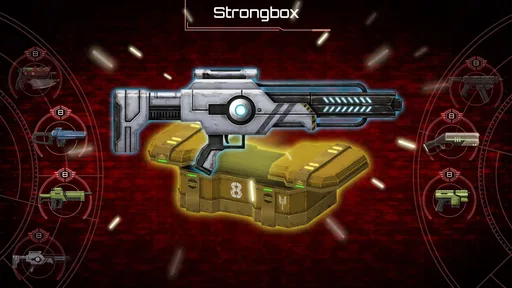
The action also gives the customization system a practical purpose. A new weapon is not merely a cosmetic reward when it changes how I handle a crowded encounter. A loadout that feels comfortable against ordinary enemies may become awkward when pressure increases, while another setup may offer better control at the cost of a less forgiving play style. I enjoyed this trial-and-adjustment loop because it made equipment decisions feel connected to play rather than separate from it.
One useful habit is to avoid treating every upgrade as an automatic improvement. I found it more helpful to ask what problem I was trying to solve. If enemies were reaching me too often, I needed a setup that supported movement and space. If a fight felt slow, I looked for a stronger offensive answer instead of simply selecting the newest item. This approach saves time and makes the progression feel more deliberate.
The game is especially satisfying when a previously uncomfortable mission becomes manageable after a small change in approach. That change might come from a different gun, a better combination of equipment, or simply learning when to stop firing and move. The improvement feels earned because it comes from both character development and player understanding. That is a stronger loop than a game where progress is only a matter of collecting currency and pressing an upgrade button.
Customization has real consequences
The hero-building side gives the action more staying power. I was not just choosing a character and leaving the rest to the game; I was shaping a setup around the way I preferred to play. Some players will enjoy experimenting with a forceful approach, while others may prefer a more controlled style that leaves room to react. The important point is that the game encourages a personal solution instead of making every player use the same pattern.
A practical tip is to keep a clear purpose for your main setup and change only one major element at a time. When I changed too many things together, it became difficult to tell whether a mission improved because of the weapon, the gear, or a change in my own movement. Testing one adjustment at a time makes the progression easier to understand and prevents useful equipment from being discarded simply because it was used in the wrong combination.
There is also a trade-off between chasing stronger equipment and learning the encounters. Better gear can make a difficult situation less punishing, but it cannot replace awareness when enemies surround the hero. Players who rush through menus without paying attention to positioning may still struggle. Conversely, someone with modest equipment can often perform better after learning when to advance, when to retreat, and which threat deserves attention first.
This is where the game differs from many simpler mobile zombie shooters. The usual alternative is often built around a short loop: aim, fire, collect a reward, and repeat. SAS: Zombie Assault 4 adds more decisions between fights and gives those decisions enough weight to influence the next attempt. It is still accessible, but it expects more involvement from the player than a purely casual shooter.
What a normal play session feels like
A realistic use case is a player with a few spare minutes who wants action immediately but also wants progress to carry into a later session. I could start with a clear goal, play through an encounter, review the result, and decide whether to improve the hero or adjust the loadout before trying again. That makes it suitable for short bursts, although the customization can tempt me to continue longer than planned.
For a longer session, the appeal changes. I begin thinking less about individual enemies and more about efficiency: which setup handles the current challenge, which rewards are worth pursuing, and whether a failed attempt revealed a genuine weakness or merely a careless mistake. This gives the game a useful rhythm of action, review, and experimentation. It is a good fit for players who like seeing a character become more capable through repeated play.
It is less suitable if you want a completely passive experience. The action demands attention, and the screen can become busy enough that playing while distracted is a poor idea. I would not choose it for a quiet background session, a story-first adventure, or a game where the main reward is discovering a carefully written world. The focus here is combat and improvement, and the game is most convincing when it stays close to those strengths.
The main weakness is the pressure of repetition
The same progression loop that makes the game rewarding can also become its biggest limitation. Repeating encounters is useful when I am testing a new build or trying to overcome a specific problem. It is less enjoyable when the repetition feels like maintenance rather than a meaningful challenge. Players who dislike replaying content to strengthen a character may find the long-term structure tiring.
The free-to-play model is another factor worth considering. The game is free, but it includes in-app purchases ranging from $0.99 to $49.99 per item. I would approach those purchases carefully. The most sensible way to play is to decide in advance whether the game is enjoyable without spending and then treat optional purchases as a personal limit, not as a requirement for keeping up. Anyone who is uncomfortable with progression systems that can encourage spending should be cautious before investing much time.
This does not make the game a poor choice, but it changes the recommendation. I can enjoy the combat while remaining disciplined about upgrades and purchases. A player who wants a completely fixed-price experience may prefer a premium action game instead, even if that alternative offers fewer character-building choices. The better option depends on whether flexibility and ongoing progression matter more than a simpler purchase model.
Another limitation is that the action can feel demanding when the screen becomes crowded. The game’s intensity is part of its identity, but it also means that mistakes can happen quickly. If I stop watching enemy movement because I am focused only on firing, the situation can deteriorate before I have time to recover. This makes the game more engaging than a basic shooter, but it also makes it less forgiving for younger or less experienced players.
Who should play it and who should skip it
I would recommend it to players who enjoy mobile zombie shooters with meaningful equipment choices. It is particularly appealing if you like testing builds, replaying missions with a better plan, and seeing direct results from changes to your hero and weapons. Fans of action games that sit between arcade immediacy and role-playing progression will probably understand its appeal quickly.
It can also suit someone who wants a game with a clear reason to return. Each session can be about improving a weak area, trying a different setup, or handling a familiar encounter more effectively. That gives the game more substance than a shooter whose only goal is to reach the end of a single short stage.
I would steer away from it if your priority is a calm game with minimal menus, a strong narrative, or a one-time experience that does not ask you to repeat content. It is also not my first recommendation for players who become frustrated by free-to-play pressure. A straightforward paid game may offer a cleaner relationship between progress and play, even if it lacks the same equipment-driven loop.
The age guidance is Teen, which matches the game’s action-oriented zombie setting. Parents should consider whether that tone is appropriate for the player rather than relying only on the fact that the game is available on mobile. The combat is the central attraction, so someone who dislikes fictional violence will not find much reason to continue once the novelty wears off.
Practical advice before committing
My first suggestion is to give the early progression time before judging a weapon or setup. A configuration that feels weak during a crowded fight may become useful after I understand its range, timing, and movement demands. Switching constantly can hide the strengths of individual choices, while a short period of focused testing makes the differences clearer.
Second, use failed attempts as information. If the hero is overwhelmed from one direction, the answer may not be a larger damage number. It may be better positioning, more careful target selection, or a loadout that gives more room to react. This is one of the less obvious strengths of the game: improvement comes from reading the fight as well as from upgrading the character.
Third, separate experimentation from serious progress. I found it helpful to keep one dependable setup for missions I wanted to complete and use another opportunity to test unfamiliar equipment. That prevents a promising experiment from disrupting every session and makes it easier to identify whether a new approach is genuinely better.
Finally, decide how you will handle purchases before the game becomes demanding. Since individual in-app items can reach $49.99, setting a personal boundary is more useful than making an impulsive decision after a difficult run. The game is at its best when spending remains optional to your enjoyment rather than becoming the solution to every obstacle.
My final verdict
SAS: Zombie Assault 4 is a solid action game for players who want more than a basic wave shooter. Its best moments come from connecting movement, target choice, weapons, and gear into a setup that feels personal. I like that progress can change how I approach a fight, and I appreciate that learning the encounters remains important even when the hero becomes stronger.
Its weaknesses are equally clear. Repetition can wear thin, the crowded action is not especially forgiving, and the free-to-play purchase range demands self-control. Those issues do not cancel out the game’s strengths, but they do make the audience narrower than the large install figure might suggest. Popularity is not the same as universal suitability.
The current version is 2.2.2, and it supports devices running Android 5.0 or later. It was released on October 17, 2014, and the continued interest around it shows that its core loop still has a recognizable appeal. I would recommend trying it if you enjoy building a combat setup and improving through repeated attempts. If you want a story-led adventure, a completely relaxed shooter, or a game with no purchase pressure, I would look elsewhere. For everyone in the middle, this is a free action game with enough depth to justify giving it a careful, measured try.
Verdict
Strengths of SAS: Zombie Assault 4
- Four distinct classes offer varied playstyles and team roles.
- Frequent missions and events provide plenty of reasons to keep playing.
- Large weapon selection supports different combat strategies.
- Co-op gameplay makes difficult missions more enjoyable with friends.
- Runs well on many devices, with simple controls suited to touchscreens.
Limitations of SAS: Zombie Assault 4
- Energy limits can interrupt longer play sessions.
- Inventory management becomes tedious after collecting many items.
- Some missions feel repetitive once familiar enemy patterns return.
- Online features require a stable connection for smooth multiplayer.
- Progression may feel slow without investing significant time or resources.
Other Releases by ninja kiwi
View All
Bloons Adventure Time TD
Strategy4.5

Bloons TD Battles
Strategy4.3

Bloons TD 6
Strategy4.8

Bloons TD 5
Strategy4.6
Similar Picks in This Category
View All
Temple Run 2: Endless Escape
Imangi Studios4.1

PUBG MOBILE
Level Infinite4.3

Free Fire: 9th Anniversary
GARENA INTERNATIONAL I4.4

Talking Tom: Hero Dash Run
Outfit7 Limited4.3

slither.io
Lowtech Studios3.9

Sniper 3D:Gun Shooting Games
Wildlife Studios4.6
Frequently Asked Questions
What is SAS: Zombie Assault 4, and how does the gameplay work?
SAS: Zombie Assault 4 is a fast-paced top-down action game focused on surviving waves of infected enemies. You choose a class, enter missions, defeat increasingly dangerous zombies, collect weapons and equipment, and improve your character between runs. The controls are designed for mobile devices, combining movement with automatic or manual aiming, depending on the weapon and settings.
Is SAS: Zombie Assault 4 free to download and play?
Yes, SAS: Zombie Assault 4 can be downloaded and played for free, but it includes optional in-app purchases. These purchases may provide premium currency, equipment, upgrades, or other conveniences, although regular gameplay also allows you to earn rewards and progress. Players should review the store listing and device settings, especially if children may access the game.
Can I play SAS: Zombie Assault 4 offline?
Some parts of SAS: Zombie Assault 4 may be accessible without a constant internet connection, but online features generally require connectivity. Multiplayer modes, account synchronization, events, leaderboards, and certain rewards may not work properly offline. For the most complete experience, including cooperative play and current content, it is best to use a stable internet connection.
Does SAS: Zombie Assault 4 support multiplayer or cooperative gameplay?
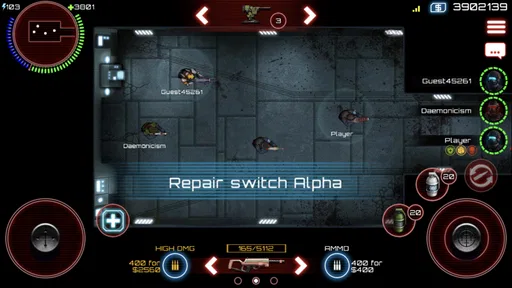
Yes, cooperative multiplayer is one of the main attractions of SAS: Zombie Assault 4. Players can team up with others to fight through zombie missions, combine different character classes, and handle tougher enemy waves more effectively. Cooperation is especially useful during difficult encounters, although connection quality and the availability of other players can affect the overall experience.
Are there different character classes and ways to customize progression?
The game offers several character classes with distinct abilities, weapons, and play styles, allowing you to choose between approaches such as direct firepower, defensive support, or specialized combat. Progression includes leveling up, unlocking skills, and collecting better equipment. Because resources can be limited, new players should focus upgrades on a preferred class before spreading items across multiple characters.
Play our best games!


